
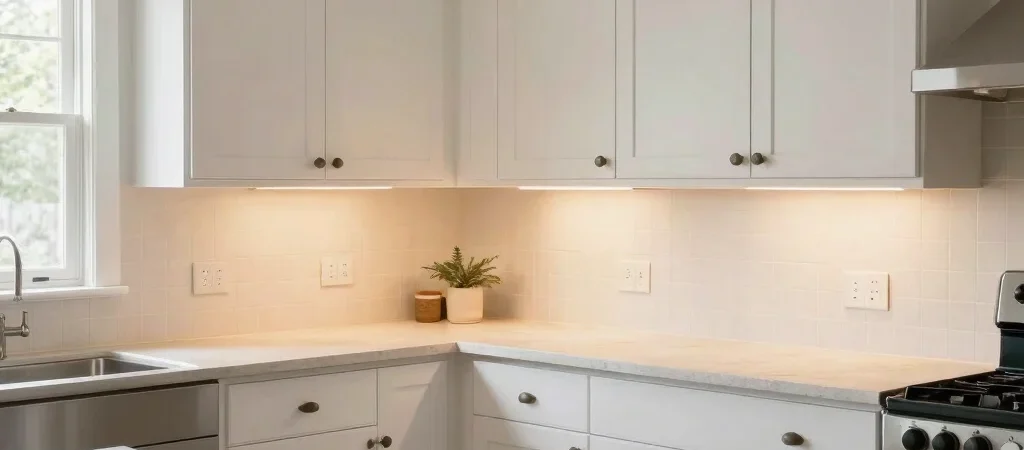
You notice poor kitchen lighting when your own shadow falls across the cutting board. Replacing cabinets or opening a wall is rarely the first answer. The more practical move is to separate the light you need for food preparation from the softer light that makes the kitchen comfortable after dinner.
Light The Work Surface
Look at the counter where you chop, make coffee, or read a recipe, and identify what casts the shadow. A ceiling fixture behind you may light the floor well while leaving the area beneath upper cabinets dim.
Where suitable and safely installed, under-cabinet lighting can put light directly on the counter. If you rent or do not want a permanent change, consider plug-in or battery-powered options, checking the product instructions and your lease before installation.
Give The Room A Softer Glow
Task lighting does not have to carry the whole mood of the room. A pendant over an island or table can create a more intimate pool of light, while a warm-toned bulb in a secondary fixture helps the kitchen feel less stark in the evening.
Keep the fixtures’ color temperature in mind as you add layers. If one light looks blue-white and another looks amber, the mismatch can distract from otherwise simple finishes; check bulb labels and compare them in the room before buying several.
Work With Existing Finishes
Light changes how a backsplash, countertop, and cabinet color appear, so test the setup at the times you use the kitchen most. A soft white wall may feel crisp in daylight and warmer under an evening lamp.
Start with one shadowed task area and solve that problem before adding fixtures everywhere. A well-lit counter and one comfortable evening light usually make a more noticeable difference than a dramatic change made without a plan.